
 EN
EN
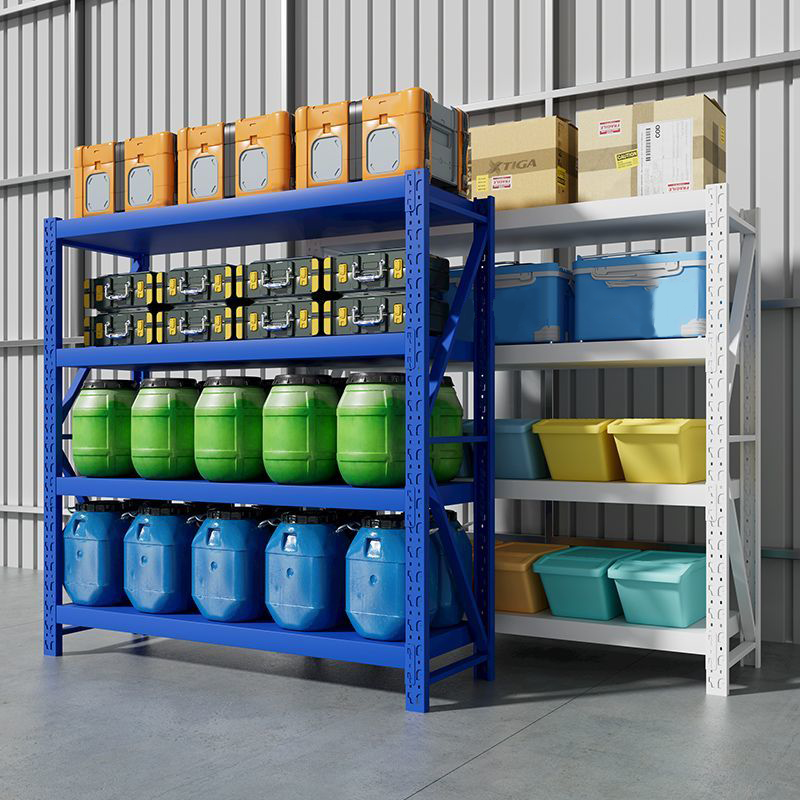
Modern supply chain operations depend on precision, speed, and systematic organization to meet increasing customer demands and competitive pressures. At the foundation of every efficient distribution center, fulfillment facility, and storage operation lies a critical infrastructure component that often goes unnoticed until problems arise: warehouse shelves. These structural systems serve as the skeletal framework that determines how inventory flows, how quickly orders can be fulfilled, and how effectively space translates into operational capacity. Without properly designed and maintained warehouse shelves, even the most advanced inventory management software and trained personnel cannot compensate for the resulting inefficiencies, safety hazards, and bottlenecks that inevitably emerge throughout the supply chain network.
The criticality of warehouse shelves extends far beyond simple storage functionality. These systems directly influence inventory accuracy, worker safety, operational throughput, and ultimately the reliability of promise delivery to end customers. In an era where supply chain resilience has become a strategic priority for businesses across industries, understanding why warehouse shelves play such a pivotal role helps organizations make informed decisions about facility design, equipment investment, and operational protocols. This article examines the fundamental reasons warehouse shelves constitute a critical element in organized supply chain management, exploring their impact on space utilization, inventory control, labor productivity, safety compliance, and overall supply chain performance metrics.
The Foundation of Space Optimization and Capacity Management
Vertical Storage Maximization Through Structured Shelving Systems
Warehouse real estate represents one of the most significant fixed costs in supply chain operations, making efficient space utilization a financial imperative rather than merely an operational preference. Properly designed warehouse shelves enable organizations to leverage vertical space that would otherwise remain underutilized in floor-based storage configurations. By extending storage capacity upward through multi-level shelving systems, facilities can increase their effective storage density by three to five times compared to ground-level pallet storage alone. This vertical expansion reduces the per-unit storage cost significantly while avoiding the substantial capital expenditure required for facility expansion or additional warehouse locations.
The strategic arrangement of warehouse shelves allows supply chain managers to align storage capacity with inventory velocity profiles. Fast-moving items can be positioned at accessible heights and locations, while slower-turning products utilize higher shelf levels where retrieval frequency justifies the additional effort. This tiered approach to space allocation ensures that the most valuable cubic footage—the easily accessible zone between waist and shoulder height—is reserved for inventory that generates the highest throughput. Without structured shelving systems providing this dimensional flexibility, warehouses would face an impossible choice between accessibility and capacity, ultimately compromising both objectives.
Density Configuration Aligned with Inventory Characteristics
Different product categories demand distinct storage approaches based on size, weight, fragility, and turnover characteristics. Warehouse shelves provide the configurability needed to accommodate this inventory diversity within a unified facility footprint. Adjustable shelving systems allow operations teams to reconfigure shelf spacing as product mix evolves, ensuring that storage infrastructure adapts to business requirements rather than constraining them. This flexibility proves particularly valuable for organizations experiencing seasonal fluctuations, product line expansions, or shifts in customer demand patterns that alter the physical profile of inventory holdings.
The ability to customize shelf depth, width, and load capacity enables warehouses to optimize storage density for specific inventory types without creating dedicated zones that may sit underutilized during demand shifts. Heavy industrial components require robust warehouse shelves with substantial load ratings and deeper profiles, while smaller consumer goods benefit from narrower, more frequent shelf divisions that prevent wasted space around compact items. This granular control over storage configuration directly impacts how many stock-keeping units a facility can accommodate and how efficiently those items can be accessed during order fulfillment operations.
Aisle Width Optimization and Traffic Flow Engineering
The configuration of warehouse shelves fundamentally determines aisle width requirements, which in turn governs the efficiency of material handling equipment movement and picker traffic patterns. Strategic shelving layout allows facilities to balance the competing demands of storage density and operational accessibility. Narrower aisles created by properly planned warehouse shelves increase the percentage of facility space dedicated to actual storage rather than circulation, but must be carefully engineered to accommodate the turning radius and operational clearance requirements of forklifts, reach trucks, and order picking vehicles used in the facility.
Advanced shelving designs incorporate considerations for one-way versus two-way traffic flows, dedicated picking aisles versus replenishment corridors, and the integration of automated material handling systems. These layout decisions, all anchored by the placement and configuration of warehouse shelves, directly impact labor productivity by minimizing travel distance and reducing congestion during peak operational periods. Facilities that fail to engineer shelving layouts with traffic flow optimization in mind frequently experience bottlenecks, worker safety incidents, and order fulfillment delays that cascade throughout the supply chain as customer commitments are missed.
Inventory Accuracy and Control Enhancement
Location Management and Systematic Addressing
Effective inventory control begins with knowing precisely where every item resides within the facility at any given moment. Warehouse shelves provide the physical structure necessary to implement systematic location addressing schemes that enable accurate inventory tracking. Each shelf position can be assigned a unique identifier—typically incorporating aisle, bay, level, and position coordinates—that creates an unambiguous reference system for both human workers and warehouse management software. This addressing precision eliminates the ambiguity inherent in floor storage arrangements where inventory locations shift constantly and boundaries between different products become unclear.
The fixed nature of warehouse shelves creates stable reference points that remain consistent across shifts, seasons, and operational changes. This stability enables inventory accuracy initiatives including cycle counting programs, ABC classification strategies, and exception-based investigation processes. When discrepancies arise between system records and physical counts, the structured location system provided by shelving infrastructure allows teams to quickly isolate and investigate specific areas rather than conducting facility-wide searches that disrupt ongoing operations and consume valuable labor hours.
First-In-First-Out Rotation and Product Dating Control
Many industries—particularly food, pharmaceuticals, chemicals, and consumer goods—require strict adherence to first-in-first-out inventory rotation to prevent product obsolescence, expiration, and quality degradation. Warehouse shelves designed with flow-through configurations or clearly defined front-to-back depth enable consistent FIFO practices by creating physical pathways that naturally guide product movement. Gravity flow shelving systems take this concept further by using inclined roller tracks or wheel beds that automatically present the oldest inventory at the pick face while newly received goods are loaded from the rear.
The alternative to structured shelving—floor stacking or block storage—makes FIFO rotation extremely difficult to maintain consistently, particularly during high-volume periods when operational pressure encourages workers to select the most accessible inventory rather than the oldest. This breakdown in rotation discipline leads to expired inventory write-offs, customer complaints about short-dated products, and potential regulatory compliance issues in controlled industries. Warehouse shelves eliminate this risk by making correct rotation practices the path of least resistance, embedding inventory control discipline into the physical infrastructure rather than relying solely on procedural compliance.
Segregation of Inventory Categories and Regulatory Compliance
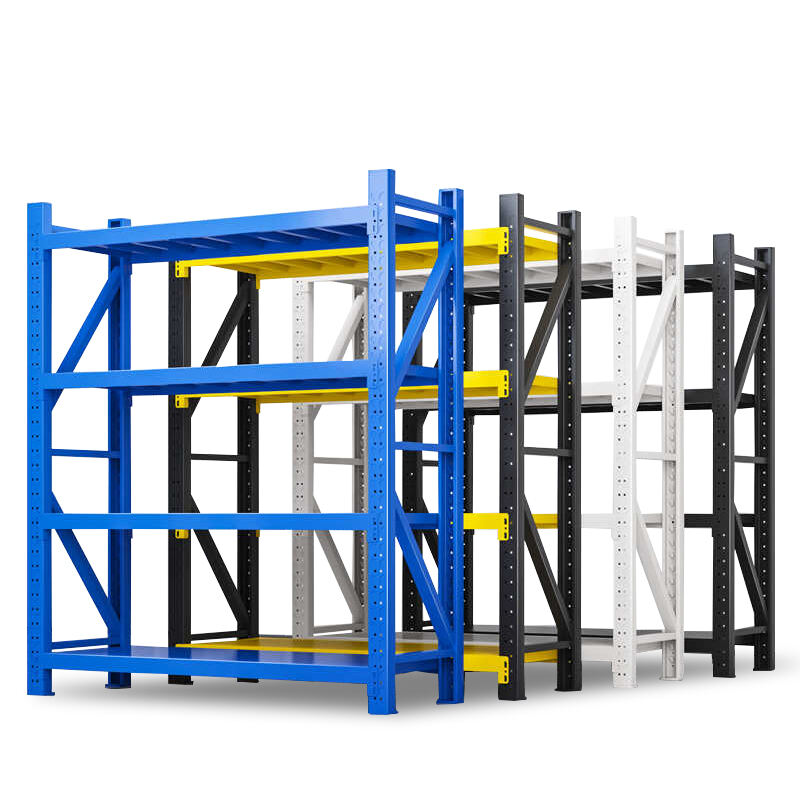
Many supply chains handle diverse inventory requiring physical segregation to maintain product integrity, safety standards, or regulatory compliance. Warehouse shelves provide clear physical boundaries that prevent cross-contamination, unauthorized mixing, or confusion between similar-appearing products with different specifications. Hazardous materials can be isolated on dedicated shelving equipped with spill containment features, while food-grade products maintain separation from non-food items as required by food safety regulations. This compartmentalization would be virtually impossible to maintain consistently in floor-based storage where boundaries are invisible and easily violated.
The visual clarity provided by warehouse shelves also supports quality control and inspection processes. Inventory organized on shelving systems can be visually scanned quickly to identify obvious anomalies such as damaged packaging, incorrect placement, or unauthorized product movement. The three-dimensional organization created by shelving infrastructure makes these inspections far more efficient than examining inventory compressed into floor stacks where only the outer layer remains visible. This visibility enhancement directly supports supply chain quality objectives by enabling early detection of problems before they propagate to customers.
Labor Productivity and Ergonomic Performance Optimization
Reduction of Search Time and Picking Efficiency
Order fulfillment operations typically dedicate fifty to sixty percent of labor time to traveling and searching for items rather than actual picking activity. Warehouse shelves dramatically reduce this non-value-added time by creating predictable, organized storage locations that minimize search requirements. When inventory addresses correspond reliably to physical shelf positions, pickers can proceed directly to required locations rather than conducting visual searches across disorganized storage areas. This efficiency improvement compounds across thousands of daily picking transactions, translating directly into higher order fulfillment capacity without proportional increases in labor costs.
The visual organization provided by warehouse shelves also reduces cognitive load on warehouse workers who can quickly scan clearly labeled shelf positions rather than deciphering cluttered floor stacks where products blend together. This mental efficiency reduces picker fatigue over shift duration and decreases error rates that require costly correction processes. Facilities reporting implementation of systematic shelving organization typically measure picking productivity improvements of twenty to forty percent compared to their previous unstructured storage approaches, demonstrating the substantial operational value these systems deliver.
Ergonomic Access and Injury Prevention
Worker safety and ergonomic performance represent critical concerns in warehouse operations where musculoskeletal injuries account for significant lost time and workers' compensation costs. Warehouse shelves enable ergonomic inventory placement strategies that position frequently accessed items within the golden zone—the vertical range from knuckle to shoulder height where reaching and lifting create minimal strain. Less frequently accessed inventory can occupy higher or lower shelf positions where occasional non-optimal reaching is justified by the infrequent access pattern, but the bulk of picking activity occurs within ergonomically favorable zones.
This strategic vertical placement would be impossible without structured warehouse shelves providing the necessary elevation options. Floor storage forces workers into repeated bending and lifting from ground level, creating cumulative stress on lower backs and knees. Conversely, unstructured high stacking requires unsafe climbing or extended overhead reaching that risks both acute injuries from falls and chronic shoulder problems from repeated overhead work. Properly configured warehouse shelves eliminate these extremes by presenting inventory at heights optimized for human capability, directly reducing injury rates and associated costs while improving worker satisfaction and retention.
Material Handling Equipment Integration and Mechanization
Modern warehouses increasingly rely on material handling equipment ranging from basic forklifts to sophisticated automated storage and retrieval systems. Warehouse shelves designed to integrate with this equipment multiply the productivity benefits of mechanization by ensuring that infrastructure and equipment capabilities align effectively. Pallet racking systems with standardized beam heights accommodate forklift operations efficiently, while shelving designed for automated picking systems includes mounting points for robotics, conveyor interfaces, and sensor integration necessary for autonomous operation.
The standardization provided by warehouse shelves also enables equipment flexibility, allowing facilities to deploy various handling solutions across different operational zones without requiring infrastructure modifications. This equipment-agnostic infrastructure approach protects the substantial capital investment in facility shelving as material handling technology evolves and operational requirements change. Facilities lacking this structured foundation face significant barriers to mechanization adoption since equipment cannot operate efficiently in unstructured storage environments, limiting their ability to achieve the productivity levels competitors extract from integrated automation solutions.
Safety Enhancement and Risk Mitigation Across Operations
Structural Stability and Load Distribution Engineering
Warehouse safety depends fundamentally on preventing structural failures that could injure workers, damage inventory, or disrupt operations. Properly engineered warehouse shelves distribute weight loads according to calculated structural capacity, preventing dangerous overloading that leads to collapse incidents. Industrial shelving systems undergo rigorous load testing and certification processes that establish safe working limits for various configurations, providing clear operational parameters that prevent unsafe practices. This engineering discipline contrasts sharply with improvised storage solutions where load limits remain unknown and failures occur without warning.
The modular design of modern warehouse shelves also incorporates safety features including beam locks that prevent accidental dislodgement, column protectors that shield structural uprights from forklift impact, and rear guards that prevent inventory from being pushed off the back of shelves. These integrated safety elements address common hazard scenarios identified through decades of warehouse operational experience, embedding protective measures directly into the storage infrastructure rather than relying solely on procedural controls that may be bypassed under operational pressure.
Fire Safety and Emergency Response Accessibility
Fire represents a catastrophic risk in warehouse environments where concentrated inventory creates substantial fuel loads and limited egress options may trap personnel. Warehouse shelves contribute to fire safety by maintaining clear separation between stored materials, allowing fire suppression systems to operate effectively and preventing fire spread through continuous fuel beds that characterize floor stacking arrangements. The aisle structure created by shelving layouts also provides defined evacuation routes and fire department access corridors that would not exist in open floor storage configurations where paths become blocked or ambiguous during emergency conditions.
Many industrial warehouse shelves incorporate features specifically designed to support fire protection systems including open-grid decking that allows sprinkler penetration to lower shelf levels, flame-resistant coatings on structural components, and clearance specifications that maintain required distances from overhead sprinkler heads. These fire-safety-integrated designs help facilities maintain compliance with NFPA standards and insurance requirements that govern warehouse fire protection, potentially reducing insurance premiums while genuinely improving personnel safety in worst-case scenarios.
Visibility and Situational Awareness Enhancement
Accident prevention depends heavily on workers maintaining awareness of their surroundings including pedestrian traffic, equipment movement, and potential hazards. Warehouse shelves arranged in systematic layouts create predictable traffic patterns and clear sight lines that enhance situational awareness compared to irregular storage arrangements where blind corners and unexpected obstructions create collision risks. The vertical organization provided by shelving also keeps floor areas clear of stored inventory, eliminating tripping hazards and ensuring that escape routes remain unobstructed throughout facility operation.
The clear aisle demarcation created by warehouse shelves also supports enforcement of pedestrian safety zones and equipment-only corridors that separate workers from vehicle traffic. These physical boundaries prove far more effective than floor markings alone in preventing dangerous interactions between personnel and material handling equipment. Facilities that maintain well-organized shelving infrastructure consistently report lower incident rates than comparable operations relying on less structured storage approaches, demonstrating the direct safety value these systems provide beyond their primary storage function.
Supply Chain Responsiveness and Scalability Support
Rapid Reconfiguration for Demand Volatility
Modern supply chains face increasing demand volatility driven by e-commerce growth, shortened product lifecycles, and unpredictable market conditions. Warehouse shelves with adjustable configurations enable facilities to respond quickly to these changes without requiring major capital expenditure or operational downtime. Shelf heights can be modified to accommodate different product sizes, entire sections can be repurposed from pallet storage to piece-pick operations, and seasonal capacity expansions can be implemented through temporary shelving additions that integrate seamlessly with permanent infrastructure.
This reconfiguration capability provides supply chain flexibility that translates directly into competitive advantage. Companies can accept new product lines, accommodate promotional volume surges, or pivot to different market segments without first securing new warehouse space—a process that typically requires months of lead time and substantial investment. The modular nature of quality warehouse shelves essentially provides built-in scalability that grows and contracts with business needs, eliminating facility constraints that might otherwise limit strategic options during critical market opportunities.
Multi-Client and Third-Party Logistics Segregation
Third-party logistics providers and shared warehouse facilities serve multiple clients within single locations, requiring absolute inventory segregation to prevent mixing and ensure accurate client billing. Warehouse shelves provide the physical compartmentalization necessary to maintain these distinct inventory pools while maximizing facility utilization. Each client can be assigned dedicated shelving zones with clear boundaries that prevent operational errors, while the overall facility maintains high storage density that makes shared warehousing economically viable for all parties.
The clear demarcation provided by warehouse shelves also simplifies the complex inventory tracking required in multi-client environments where different customers may stock identical or similar products requiring careful identification. Shelving-based location systems allow warehouse management software to maintain precise records of which inventory belongs to which client based on physical position rather than relying solely on label reading that remains vulnerable to scanning errors. This infrastructure-supported accuracy prevents costly inventory discrepancies that damage client relationships and create financial disputes.
Technology Integration and Future-Readiness
Supply chain technology continues evolving rapidly with emerging solutions including autonomous mobile robots, vision-guided picking systems, Internet of Things inventory sensors, and artificial intelligence optimization platforms. Warehouse shelves designed with technology integration capabilities provide the mounting points, power distribution infrastructure, and physical standardization these systems require for effective deployment. Facilities with forward-thinking shelving infrastructure can adopt new technologies incrementally as business cases justify investment, while operations lacking this foundation face prohibitive retrofit costs that delay or prevent technology adoption entirely.
The standardization inherent in quality warehouse shelves also creates the predictable environment that advanced technologies require for reliable operation. Autonomous robots navigate more effectively when aisles maintain consistent widths and configurations, while computer vision systems achieve higher accuracy when products appear in standardized shelf positions with adequate lighting and contrast. This symbiotic relationship between structured storage infrastructure and advanced technology means that investment in quality warehouse shelves today creates options for future technology adoption that will likely prove essential for maintaining competitive operations in increasingly automated supply chain environments.
FAQ
What determines the appropriate warehouse shelf load capacity for a specific operation?
Load capacity requirements depend on the weight characteristics of stored inventory, storage height, and seismic considerations for the facility location. Industrial warehouse shelves should be specified based on the heaviest anticipated loads with appropriate safety factors, typically calculated by structural engineers who consider both uniform distributed loads and point load scenarios. The load rating should account for the combined weight of inventory plus any storage containers or pallets, with each shelf level independently rated and clearly marked to prevent dangerous overloading situations.
How frequently should warehouse shelving systems undergo safety inspections?
Industry best practices recommend formal warehouse shelf inspections at least annually, with more frequent checks in high-traffic environments or facilities using heavy material handling equipment that may cause structural damage. These inspections should examine uprights for straightness and damage, verify that beam connections remain secure, check for missing safety clips or column protectors, and confirm that actual loads do not exceed rated capacities. Many organizations implement weekly informal inspections by floor supervisors supplemented by detailed annual evaluations performed by qualified inspectors who document findings and require remediation of identified hazards before continued use.
Can existing warehouse shelving be reconfigured when product mix changes significantly?
Quality modular warehouse shelves offer substantial reconfiguration flexibility allowing shelf height adjustments, aisle width modifications, and conversion between storage types without replacing the entire system. Adjustable beam levels can be repositioned to accommodate different product sizes, while uprights and structural components typically remain in place providing framework continuity. The extent of possible reconfiguration depends on the original system design, with industrial-grade shelving offering greater adaptability than lighter-duty residential-style units. Organizations anticipating significant product mix evolution should specify flexible shelving systems initially to avoid costly replacement when business requirements change.
What role do warehouse shelves play in achieving inventory accuracy targets above ninety-nine percent?
Warehouse shelves contribute to high inventory accuracy by providing the systematic location structure necessary for reliable tracking and cycle counting programs. The fixed location addresses created by shelving systems eliminate the location ambiguity that causes many inventory discrepancies, while the visual organization enables rapid verification during counting activities. However, shelving alone cannot ensure accuracy—organizations must combine quality shelving infrastructure with robust warehouse management systems, disciplined operational procedures, and regular cycle counting programs. The shelving provides the physical foundation, but achieving sustained ninety-nine percent accuracy requires integration of technology, process discipline, and organizational commitment to inventory control as a strategic priority throughout warehouse operations.
Table of Contents
- The Foundation of Space Optimization and Capacity Management
- Inventory Accuracy and Control Enhancement
- Labor Productivity and Ergonomic Performance Optimization
- Safety Enhancement and Risk Mitigation Across Operations
- Supply Chain Responsiveness and Scalability Support
-
FAQ
- What determines the appropriate warehouse shelf load capacity for a specific operation?
- How frequently should warehouse shelving systems undergo safety inspections?
- Can existing warehouse shelving be reconfigured when product mix changes significantly?
- What role do warehouse shelves play in achieving inventory accuracy targets above ninety-nine percent?