
 EN
EN
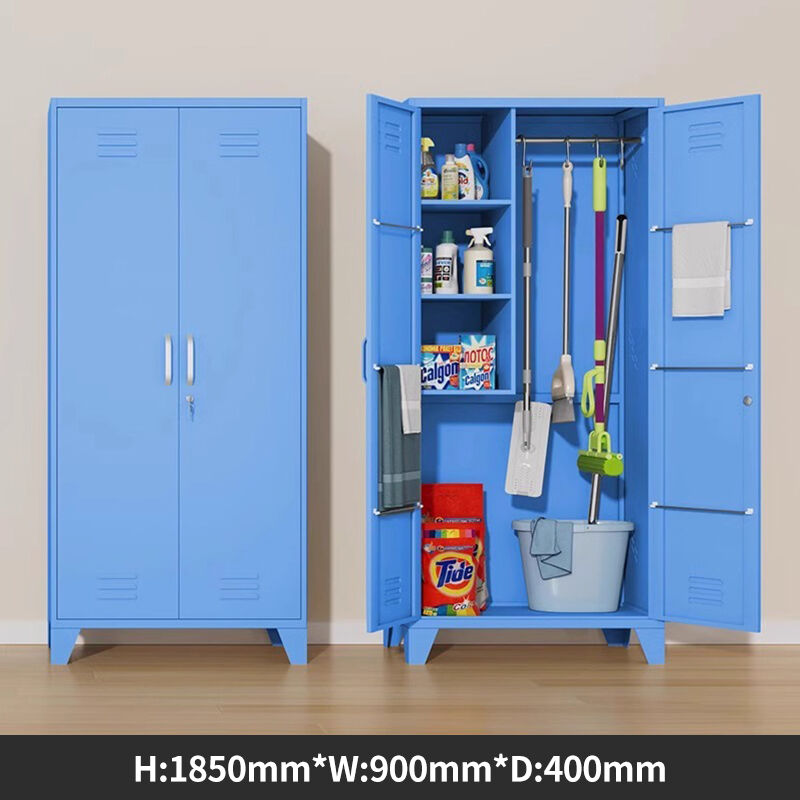
Industrial tool cabinet materials serve as the foundation for equipment longevity and operational reliability in demanding manufacturing environments. The selection of appropriate tool cabinet materials directly impacts resistance to corrosion, structural integrity under heavy loads, and long-term cost effectiveness across diverse industrial applications. Understanding the fundamental properties of different tool cabinet materials enables facility managers and procurement professionals to make informed decisions that align with specific operational requirements and environmental conditions.
The durability requirements for industrial tool storage systems extend beyond simple material strength to encompass thermal stability, chemical resistance, and dimensional stability over extended service periods. Modern manufacturing facilities expose tool cabinet materials to varied environmental stressors including temperature fluctuations, humidity changes, chemical exposure, and mechanical stress from frequent access cycles. These operational realities necessitate a comprehensive evaluation of material properties to ensure optimal performance throughout the intended service life of the storage system.
Steel Alloy Compositions and Durability Performance
Carbon Steel Foundations in Tool Storage Applications
Carbon steel represents the most widely implemented category of tool cabinet materials in industrial environments due to its exceptional strength-to-weight ratio and cost effectiveness. The carbon content in these tool cabinet materials typically ranges from 0.1% to 0.3%, providing adequate tensile strength while maintaining workability for manufacturing processes. Low-carbon steel formulations offer superior weldability and formability, enabling complex cabinet geometries and integrated reinforcement structures that enhance overall durability.
The microstructure of carbon steel tool cabinet materials undergoes continuous refinement through controlled cooling processes and heat treatment procedures. These manufacturing techniques optimize grain structure to achieve uniform mechanical properties throughout the material thickness. Cold-rolled carbon steel demonstrates enhanced surface finish quality and dimensional accuracy compared to hot-rolled alternatives, contributing to improved paint adhesion and corrosion protection system effectiveness.
Mechanical properties of carbon steel tool cabinet materials include yield strengths typically ranging from 250 to 400 MPa, depending on specific alloy composition and processing methods. This strength level provides adequate resistance to deformation under typical tool loading conditions while maintaining sufficient ductility to absorb impact energy without brittle failure. The elastic modulus of approximately 200 GPa ensures minimal deflection under distributed loads, preserving drawer alignment and door operation integrity over extended service periods.
Stainless Steel Advantages in Corrosive Environments
Stainless steel tool cabinet materials offer superior corrosion resistance through the formation of passive chromium oxide surface layers that regenerate automatically when damaged. The 300-series stainless steels, particularly 304 and 316 grades, provide excellent durability in environments exposed to moisture, cleaning chemicals, and mild acidic conditions. These tool cabinet materials maintain their mechanical properties and aesthetic appearance without requiring extensive protective coating systems.
The austenitic crystal structure of 300-series stainless steel tool cabinet materials contributes to excellent formability and weldability characteristics. This metallurgical advantage enables complex cabinet designs with integrated reinforcement features and smooth surface transitions that minimize stress concentrations. The work-hardening behavior of these materials increases strength in high-stress areas through normal service loading, effectively creating self-reinforcing structures that improve long-term durability.
Cost considerations for stainless steel tool cabinet materials reflect the higher initial material investment offset by reduced maintenance requirements and extended service life. The elimination of painting and coating maintenance cycles represents significant long-term savings in environments where corrosion protection is critical. Food processing, pharmaceutical, and chemical manufacturing facilities particularly benefit from the hygienic properties and chemical resistance of stainless steel tool cabinet materials.
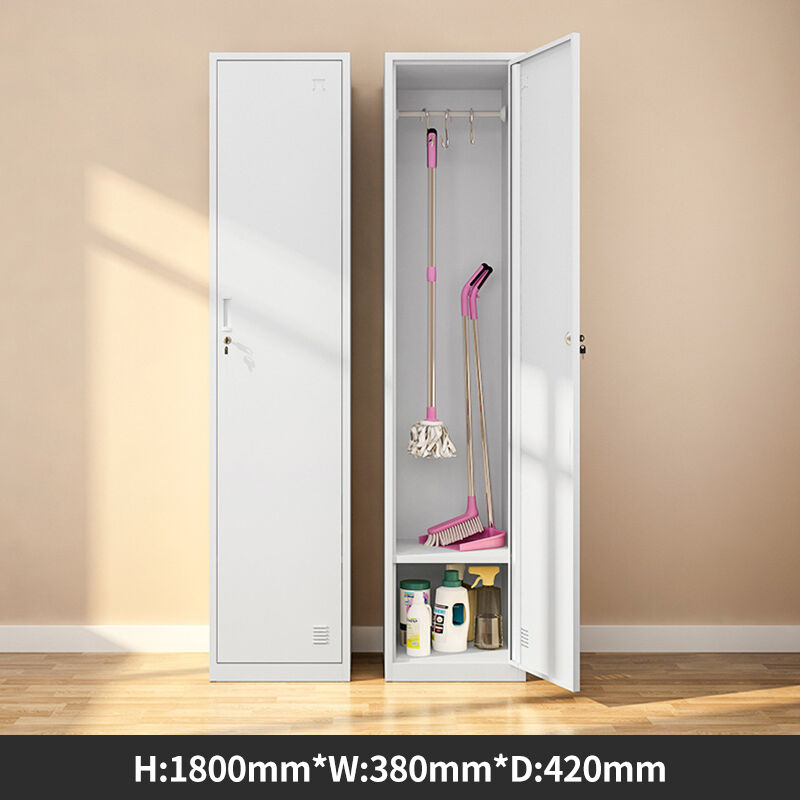
Surface Treatment Technologies for Enhanced Longevity
Powder Coating Protection Systems
Powder coating represents the most effective surface protection method for carbon steel tool cabinet materials, providing uniform coverage and superior adhesion compared to liquid paint systems. The electrostatic application process ensures complete coverage of complex geometries and internal surfaces, eliminating coating thickness variations that could compromise long-term protection. Thermosetting powder formulations create cross-linked polymer networks that resist mechanical damage and chemical attack.
The curing process for powder-coated tool cabinet materials involves precise temperature control to achieve optimal cross-link density without material degradation. Typical cure schedules require 180-200°C temperatures for 10-20 minutes, depending on coating thickness and substrate geometry. This thermal treatment also serves as a stress-relief process for welded assemblies, reducing residual stresses that could contribute to premature failure or distortion.
Performance characteristics of powder-coated tool cabinet materials include scratch resistance, chemical resistance, and UV stability that maintain appearance and protection throughout extended service periods. The thickness uniformity achieved through electrostatic application typically ranges from 50-100 micrometers, providing consistent barrier protection while minimizing weight addition. Color stability and gloss retention characteristics ensure professional appearance maintenance in customer-facing manufacturing areas.
Galvanization and Zinc Coating Processes
Hot-dip galvanization provides sacrificial corrosion protection for steel tool cabinet materials through the formation of zinc-iron alloy layers at the substrate interface. The galvanizing process creates a metallurgically bonded coating that cannot delaminate under normal service conditions, ensuring continuous protection even when surface damage occurs. Zinc coating thickness typically ranges from 45-85 micrometers, providing decades of corrosion protection in most industrial environments.
The electrochemical protection mechanism of galvanized tool cabinet materials functions through preferential zinc oxidation, which prevents iron oxidation even at coating discontinuities. This cathodic protection extends beyond the immediate coating area, providing edge protection and fastener hole protection that maintains structural integrity. The self-healing nature of zinc coatings accommodates minor surface damage without compromising overall protection effectiveness.
Galvanized tool cabinet materials demonstrate excellent performance in outdoor and high-humidity environments where atmospheric corrosion represents a primary durability concern. The zinc patina formation process creates stable corrosion products that actually improve protection over time, unlike iron oxide formation which accelerates material degradation. Post-galvanization painting systems can further enhance protection and provide aesthetic customization while maintaining the underlying sacrificial protection.
Composite Material Integration for Specialized Applications
High-Density Polyethylene Components
High-density polyethylene represents an emerging category of tool cabinet materials particularly suitable for chemical resistance and weight reduction applications. The molecular structure of HDPE provides excellent resistance to acids, bases, and organic solvents that could degrade metallic materials over time. These tool cabinet materials maintain dimensional stability across wide temperature ranges while offering superior impact resistance compared to traditional materials.
Manufacturing processes for HDPE tool cabinet materials utilize rotational molding or injection molding techniques that eliminate weld lines and stress concentrations. The seamless construction achievable with these processes creates inherently durable assemblies that resist fatigue cracking and environmental stress cracking. UV stabilizer additives protect against photodegradation, maintaining mechanical properties and appearance in outdoor applications.
The lightweight characteristics of HDPE tool cabinet materials reduce shipping costs and installation complexity while maintaining adequate strength for typical tool storage applications. Specific gravity values around 0.95 represent approximately 85% weight reduction compared to steel alternatives. This weight advantage becomes particularly significant in mobile tool storage applications and multi-level storage installations where structural loading considerations influence design decisions.
Fiber-Reinforced Composite Construction
Fiber-reinforced composite tool cabinet materials combine polymer matrix systems with continuous fiber reinforcement to achieve exceptional strength-to-weight ratios and corrosion resistance. Glass fiber reinforcement provides cost-effective strength enhancement, while carbon fiber reinforcement offers maximum stiffness for applications requiring minimal deflection. The anisotropic properties of composite materials enable tailored strength characteristics aligned with primary loading directions.
Manufacturing techniques for composite tool cabinet materials include hand layup, compression molding, and pultrusion processes that control fiber orientation and resin content for optimal mechanical properties. The curing process develops cross-linked thermoset matrices that maintain properties at elevated temperatures while resisting chemical degradation. Quality control procedures ensure consistent fiber distribution and void content minimization throughout the component thickness.
Durability advantages of composite tool cabinet materials include fatigue resistance, dimensional stability, and electromagnetic transparency that benefit specialized applications. The non-conductive properties eliminate galvanic corrosion concerns when interfacing with dissimilar metals. Temperature cycling performance surpasses metallic alternatives in applications involving repeated thermal expansion cycles. However, repairability considerations and recycling challenges require evaluation in life-cycle assessments.
Environmental Factor Considerations in Material Selection
Temperature Cycling and Thermal Expansion Management
Temperature variations in industrial environments subject tool cabinet materials to thermal expansion and contraction cycles that generate internal stresses and dimensional changes. Steel tool cabinet materials exhibit linear thermal expansion coefficients around 12 micrometers per meter per degree Celsius, requiring expansion joint considerations in large installations. The thermal mass of loaded cabinets moderates temperature fluctuations but creates thermal lag effects during rapid ambient changes.
Design strategies for managing thermal effects in tool cabinet materials include expansion joints, flexible connections, and stress-relief features that accommodate dimensional changes without inducing excessive stresses. Welded assemblies particularly benefit from post-weld stress relief treatments that reduce residual stresses and improve thermal cycling performance. Paint and coating systems must accommodate substrate movement without cracking or delamination.
Extreme temperature applications require specialized tool cabinet materials with enhanced thermal stability and reduced thermal expansion characteristics. Invar alloys and ceramic-filled composites provide minimal thermal expansion for precision applications, while high-temperature alloys maintain strength at elevated temperatures. Insulation systems protect temperature-sensitive stored items while managing condensation formation during temperature transitions.
Humidity and Moisture Resistance Strategies
Moisture exposure represents a primary durability challenge for tool cabinet materials in many industrial environments. Relative humidity levels above 60% accelerate corrosion processes in unprotected steel materials, while condensation formation creates localized high-moisture conditions regardless of ambient humidity levels. Vapor barriers and moisture management systems protect both cabinet materials and stored tools from humidity-related degradation.
Breathable coating systems allow moisture vapor transmission while preventing liquid water penetration, maintaining equilibrium moisture content in tool cabinet materials without trapping condensation. Desiccant systems actively control internal humidity levels, particularly beneficial in sealed storage applications. Drainage features and ventilation systems manage condensation removal and air circulation to prevent moisture accumulation.
Stainless steel and polymer tool cabinet materials offer inherent moisture resistance that eliminates humidity-related maintenance requirements. However, galvanic corrosion risks increase when dissimilar materials interface in high-moisture environments. Isolation gaskets and compatible fasteners prevent electrochemical reactions that could compromise material integrity at connection points.
FAQ
What steel thickness provides optimal durability for industrial tool cabinets?
Industrial tool cabinet materials typically utilize 16-gauge to 12-gauge steel thickness, with 14-gauge steel providing the optimal balance of strength, weight, and cost effectiveness for most applications. Heavier gauge materials offer increased dent resistance and load capacity but require stronger hinge and drawer slide systems to accommodate the additional weight.
How do powder coating thickness requirements vary by environmental exposure?
Standard industrial environments require 2-4 mil powder coating thickness on tool cabinet materials, while corrosive environments benefit from 4-6 mil thickness for extended protection. Marine and chemical processing applications may require specialized coating formulations with enhanced barrier properties regardless of thickness specifications.
Can composite tool cabinet materials match steel strength requirements?
Properly engineered composite tool cabinet materials can exceed steel strength-to-weight ratios while providing superior corrosion resistance. However, impact resistance and repairability considerations often favor steel materials in high-traffic industrial applications where mechanical damage risks are elevated.
What maintenance intervals ensure maximum durability from tool cabinet materials?
Preventive maintenance for tool cabinet materials should include monthly cleaning and inspection cycles, with annual detailed assessments of coating integrity and mechanical components. Powder-coated steel materials typically require touch-up maintenance every 3-5 years in standard industrial environments, while stainless steel materials may operate maintenance-free for decades with proper initial specification.
Table of Contents
- Steel Alloy Compositions and Durability Performance
- Surface Treatment Technologies for Enhanced Longevity
- Composite Material Integration for Specialized Applications
- Environmental Factor Considerations in Material Selection
-
FAQ
- What steel thickness provides optimal durability for industrial tool cabinets?
- How do powder coating thickness requirements vary by environmental exposure?
- Can composite tool cabinet materials match steel strength requirements?
- What maintenance intervals ensure maximum durability from tool cabinet materials?