
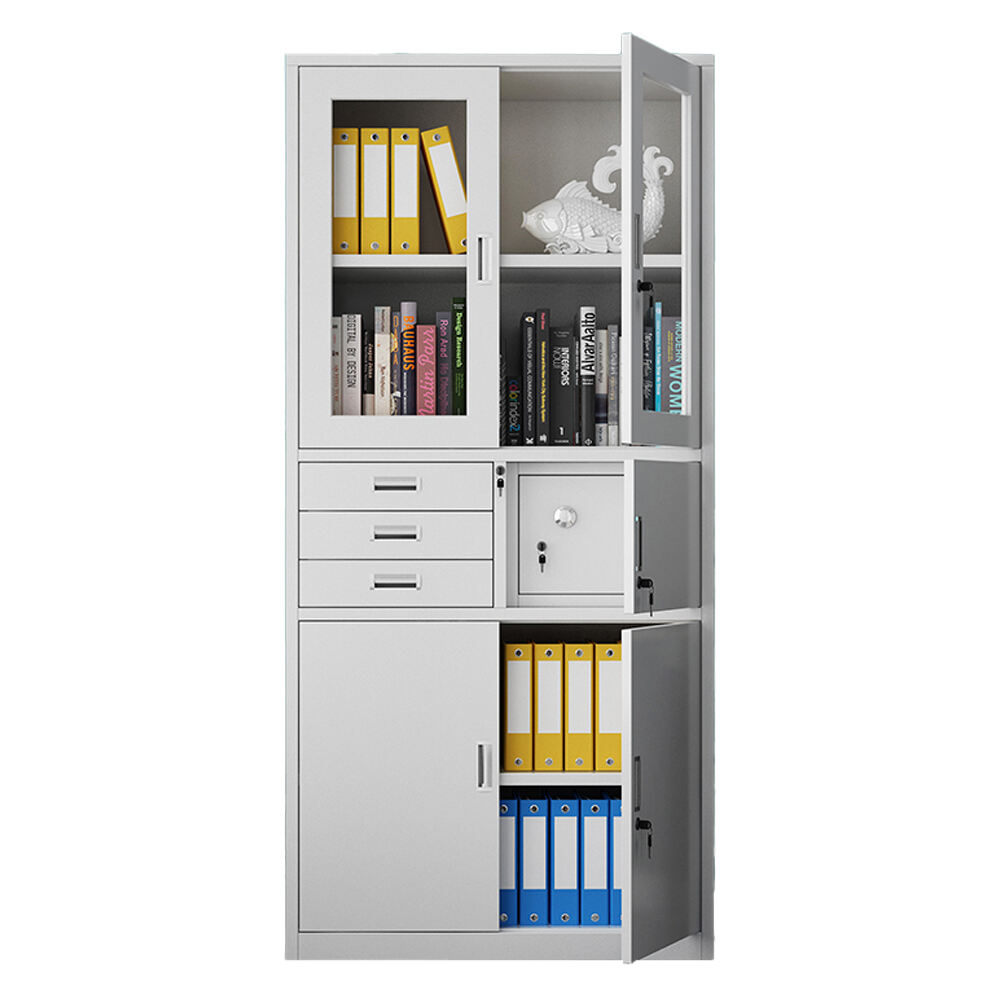
Standard Capacity Estimates for Filing Cabinets
Filing cabinet capacity is typically measured in terms of hanging file folders, which are standard for organization. Each folder can hold 50-100 sheets of paper, depending on thickness. The following estimates assume reasonable spacing for easy access without overstuffing, which could damage files or the cabinet.
- Per Drawer (Vertical Filing Cabinet): Letter-size files (8.5 x 11 inches) accommodate 150-200 folders (7,500-20,000 sheets); legal-size (8.5 x 14 inches) hold 120-150 folders (6,000-15,000 sheets).
- Full Cabinet Examples: A 2-drawer vertical cabinet holds 300-400 letter-size folders (15,000-40,000 sheets); a 4-drawer model accommodates 600-800 folders (30,000-80,000 sheets).
- Lateral Cabinets: Wider design allows for 200-300 folders per drawer, totaling 800-1,200 folders (40,000-120,000 sheets) in a 4-drawer unit.
Did You Know? Overpacking a filing cabinet can reduce its lifespan by 20-30%, as excessive weight causes drawer misalignment and structural strain.
Factors Influencing Filing Cabinet Capacity
Several elements affect how many files a cabinet can hold, allowing for customization based on your storage requirements:
- Cabinet Type and Size: Vertical cabinets are taller and narrower, ideal for small spaces; lateral cabinets offer more per-drawer space for high-volume needs.
- File Arrangement: Hanging folders reduce capacity by 10-20% compared to flat stacking but improve organization and accessibility.
- Drawer Dimensions: Standard drawers are 18-24 inches deep; deeper models increase capacity by 20-30%.
- Packing Density: Loose packing for easy access lowers capacity by 20%; tight packing maximizes it but risks damage.
- Specialized Designs: Fireproof or mobile cabinets may have 10-15% less space due to insulation or wheels.
Comparison Table of Filing Cabinet Capacities
| Cabinet Type | Number of Drawers | Folders per Drawer | Total Folders | Total Sheets (Approx.) |
|---|---|---|---|---|
| 2-Drawer Vertical | 2 | 150-200 | 300-400 | 15,000-40,000 |
| 4-Drawer Vertical | 4 | 150-200 | 600-800 | 30,000-80,000 |
| 4-Drawer Lateral | 4 | 200-300 | 800-1,200 | 40,000-120,000 |
| Mobile (2-3 Drawer) | 2-3 | 100-150 | 200-450 | 10,000-45,000 |
How to Choose a Filing Cabinet Based on Capacity
To select a filing cabinet that meets your storage needs, follow these steps:
- Estimate Your File Volume: Count current files and project future growth; aim for 20-30% extra capacity.
- Consider File Type: Letter-size for standard documents; legal-size for contracts or larger papers.
- Evaluate Space: Vertical for small offices; lateral for high-volume areas.
- Check Durability: Opt for heavy-duty metal for dense packing without sagging.
- Budget Accordingly: Basic 2-drawer models start at $50-$100; premium 4-drawer units range from $200-$500.
Common Questions About Filing Cabinet Capacity
Here are answers to frequently asked questions to help clarify filing cabinet storage:
- What is the capacity for loose sheets without folders? A standard drawer holds 2,000-3,000 sheets, but folders are recommended for organization.
- Does overpacking affect durability? Yes, it can cause drawer jams or structural wear; maintain 10-20% empty space per drawer.
- How does cabinet type impact capacity? Lateral cabinets hold 20-50% more per drawer due to wider design.
- Are there high-capacity alternatives? Consider multi-drawer or rolling cabinets for expandable storage.
- What if I need more space? Modular systems or additional units can scale up without replacing existing cabinets.
Tips for Maximizing Filing Cabinet Capacity
To get the most out of your filing cabinet:
- Use Dividers: Organize folders with tabs or dividers for efficient space use.
- Compress Files: Remove unnecessary papers regularly to free up room.
- Label Clearly: Alphabetical or categorical labeling speeds retrieval and prevents overpacking.
- Maintain Drawers: Lubricate glides annually for smooth operation with full loads.
- Go Digital: Scan and archive old documents to reduce physical file volume.
Conclusion
Understanding how many files a filing cabinet can hold is key to selecting the right storage solution for your office or home. With capacities ranging from 300-1,200 folders depending on type and size, these cabinets offer flexible options for document management. By considering factors like file type, packing density, and cabinet design, you can optimize storage efficiency and longevity. Investing in a quality filing cabinet not only accommodates your current needs but also supports future expansion, ensuring organized and accessible records for years to come.